When you click the link, it will take you to the corresponding page.
特撰コース
薄切り牛タン塩
In many countries, beef tongue is used in a variety of dishes. In Japan, the beef tongue is called 牛タン, which combines the word Ox in Japanese and the Japanese pronunciation of the tongue. It is a popular menu in Japanese barbecue restaurants to slice the soft part of the beef tongue and grill it. Other dishes of Japanese barbecue are usually served with a soy sauce-based sauce called Dare(タレ), and beef tongue is often served with salt, so this salt is also called tongue salt(タン塩). When eating the beef tongue, we can also sprinkle lemon juice or put chopped green onions to eat together. Beef tongue is Sendai (Location of Miyagi Prefectural Office) speciality cuisine.
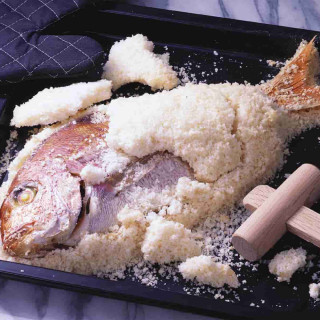
Salt-grilling, or "shioyaki," is one of the fundamental methods of Japanese grilling. "Shio" means salt, and "yaki" means grill — this cooking method involves sprinkling salt over the ingredient before grilling, and it's commonly used for fish and other seafood. For white-fleshed or small fish, it’s best to salt them right before grilling. For oily or blue-backed fish, it's recommended to salt them 30 minutes to 1 hour in advance. In either case, any moisture that comes out should be wiped off before cooking. When grilling fish, a metal skewer (called kanagushi) is often used. There are various techniques and names for how to insert the skewer. For example, "Odori-gushi" (also known as "Uneri-gushi") is a method where the fish is skewered in a way that makes it appear to be swimming on the plate. The body is bent in a wave-like shape, and the tail is lifted. " Nobori-gushi" is a similar method, named after the idea of swimming upstream, and it's typically used for river fish. Other methods include "Hira-gushi," which keeps the fish straight while grilling, and "Nihon-gushi," which uses two skewers to grill large fish like sea bream without cutting them.
特撰ステーキ盛り
ホルモン盛合せ
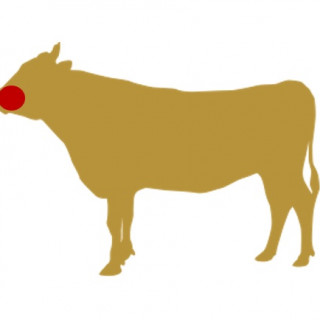
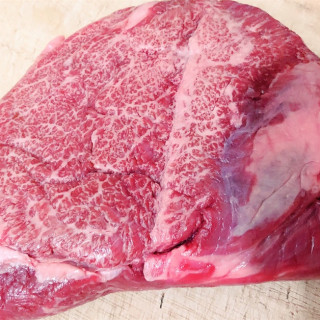
Beef cheek meat is located in the cheek part of the cow. Due to its high activity level, it contains a lot of fibers and is tough, but it can become very tender and have a rich flavor depending on the cooking method. It is mainly used in braised dishes, stews, and braising. In Japanese, "hoho" (頬) in "hohoniku" means cheek. Beef cheek meat is also called tenniku (天肉) or tsurami (ツラミ), both referring to parts of the cow's face, but there are slight differences. Tenniku refers to the meat near the temple, while tsurami is a mixture of subcutaneous fat and muscle from the cow's cheek. "Tsura" (面 つら) means face, and "mi," as in sashimi, means flesh. These parts have different textures and flavors, and it is important to bring out their characteristics through appropriate cooking methods. Beef cheek meat is suitable for braised dishes, tenniku is good for grilling or stir-frying, and tsurami is especially delicious when grilled.
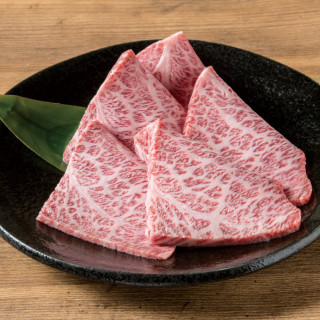
Zabuton is a part of the chuck roll of beef, located below the Kurashita. Specifically, it refers to the meat in the ribeye portion. This cut is located near the shoulder and is a rare part, with only about 3 to 4 kilograms obtainable from a single cow. Zabuton and Haneshita refer to the same part, known as Haneshita in Kansai and Zabuton in Kanto. The name "Zabuton" comes from its shape, which resembles a traditional Japanese cushion (zabuton). The name "Haneshita" literally translates to "below the wing," reflecting its anatomical position. Considering the cow's anatomical structure, Haneshita is located near the shoulder, between the torso and shoulder, under the "wing-like" structure. This part is known for being very tender and juicy compared to other parts of the chuck roll. It has a good amount of marbling, making it the "most marbled" part of wagyu beef. It is very popular for yakiniku (grilled meat) and steaks. Especially recommended for charcoal grilling or grilling, where you can enjoy its delicious aroma and taste.
豚肩ロース&赤鶏盛り合わせ
特撰カルビ
特撰ロース
キムチ盛り
酢ダレキャベツ
焼き野菜(日替り3種)
クッパorスープorビビンバor御飯